
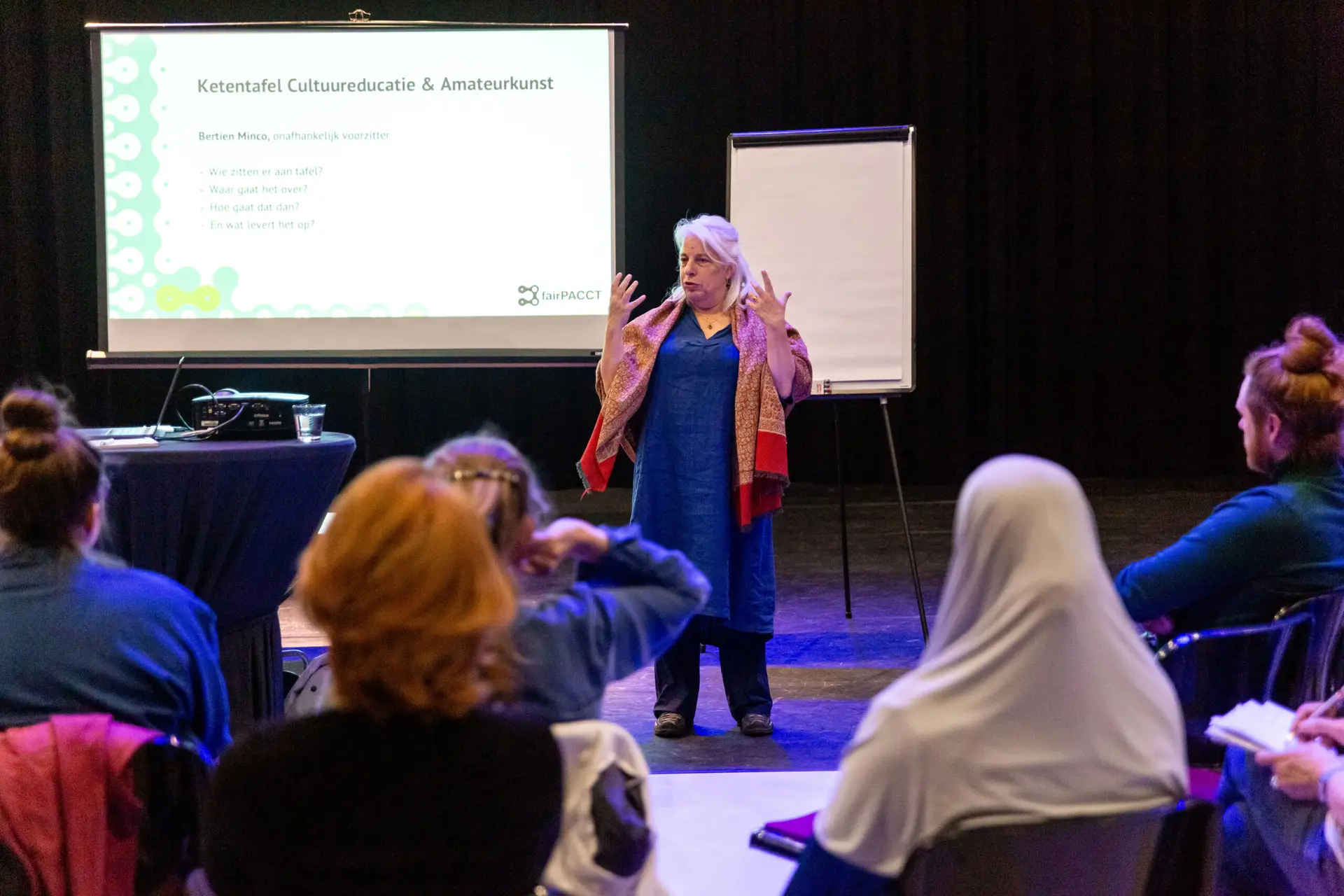
Foto: Lars Lensink | Publicatie:14/06/24
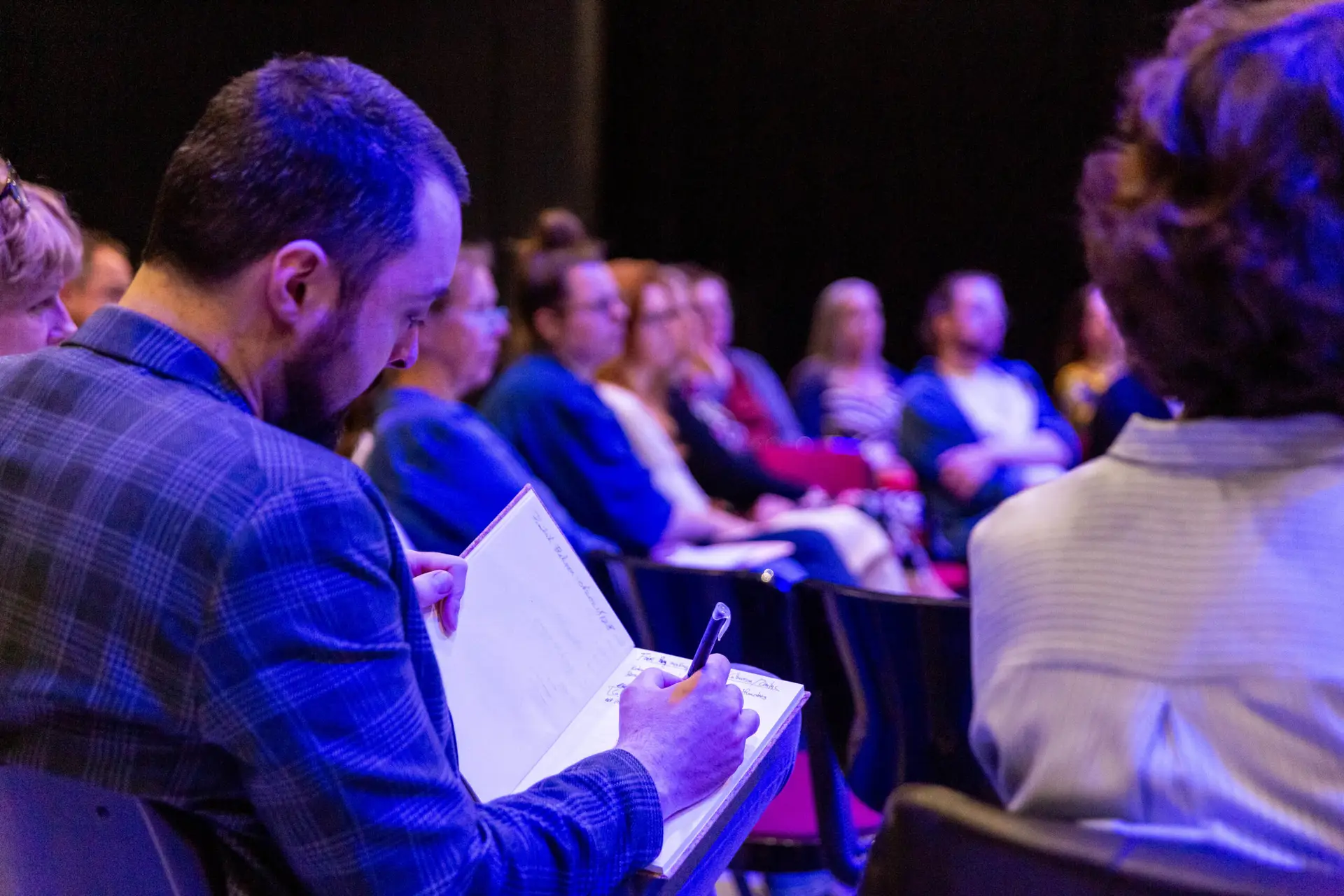
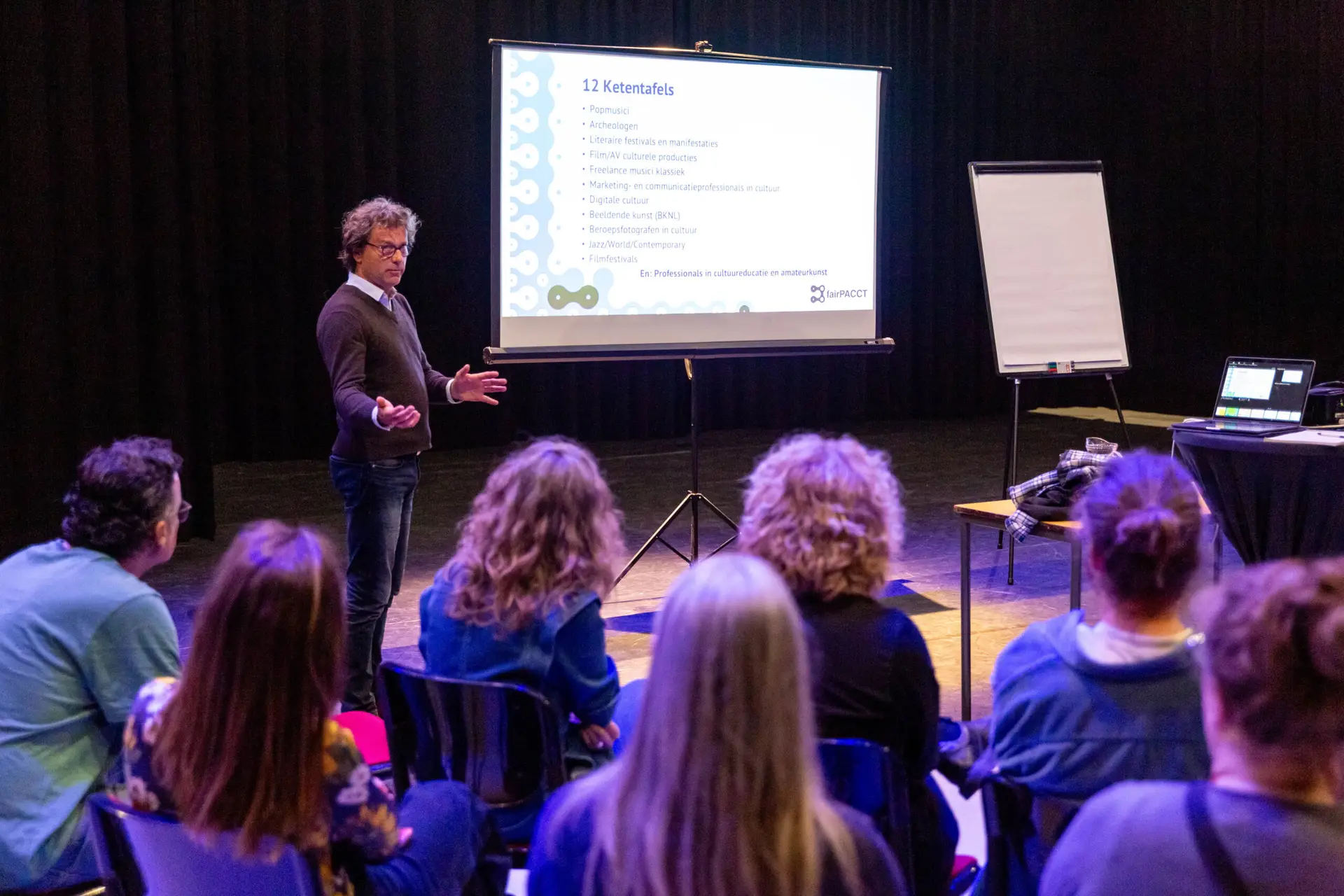
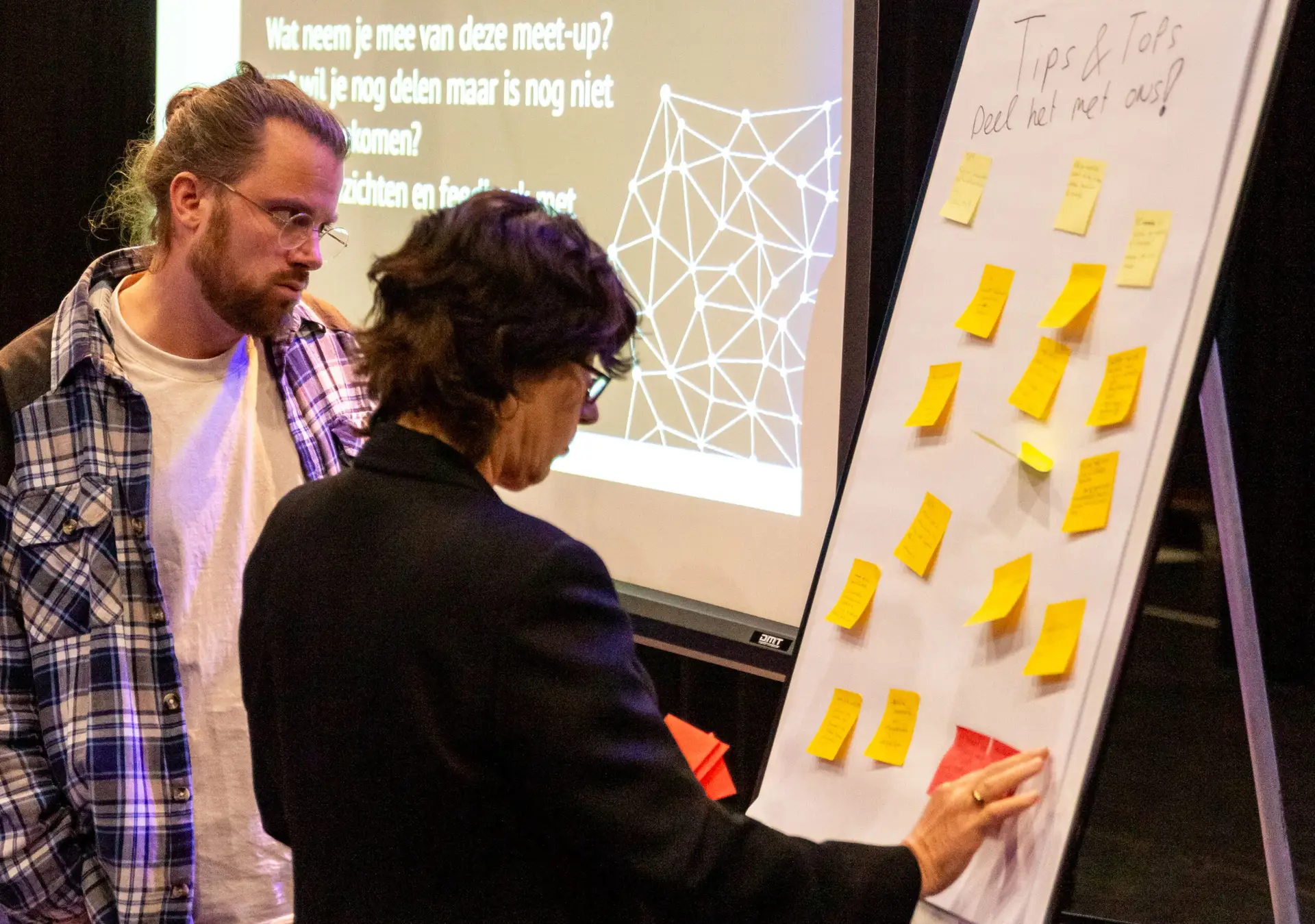
On June 6, the ‘Meet-Up Fair Pay and Fair Practice’ took place in Utrecht. It was organized by fairPACCT, Cultureon, and ZIMIHC Connect. The central focus was on the fair pay practical tools for freelancers developed by the ‘Art Professionals in Cultural Education and Amateur Arts’ chain table. The conclusion: culture and fair pay are essential for everyone, but sometimes difficult to achieve.
The value of freelancers
Bertien Minco, chair of the chain table and a long-time freelancer herself, reported that art professionals often receive limited fees, sometimes even below the minimum wage. She emphasized that it is important for every freelancer to realize: What am I worth? What is my value to society? In itself, it is a dry subject. However, within the chain table, workers, clients, and intermediaries have enthusiastically set to work on this, together with an expert independent researcher.
Simple digital calculation tool for rates
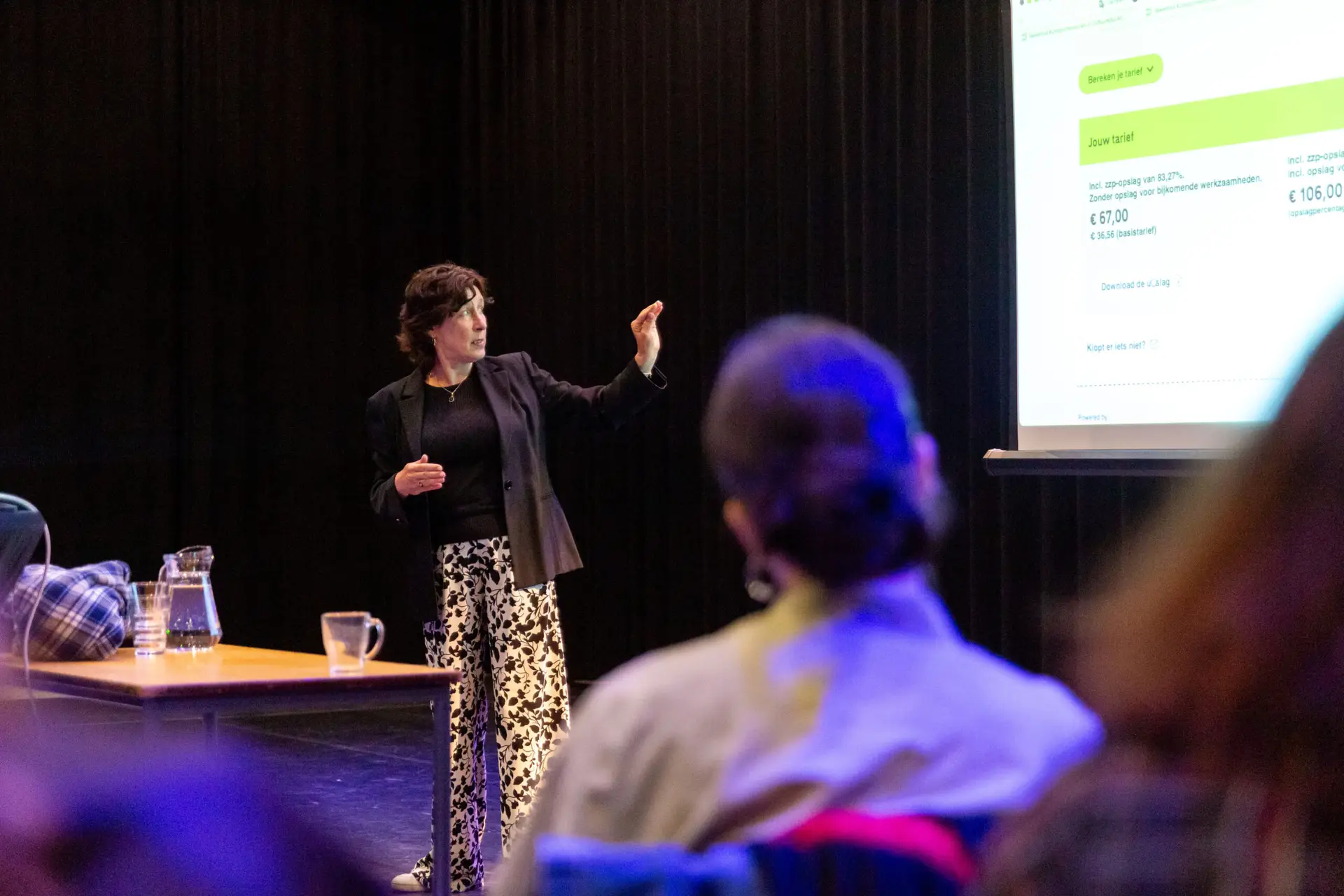
Karin Boelhouwer, chain table member and advocate at the Kunstenbond (Artists’ Union), recalled that the table identified 13 professional practices in cultural education and amateur arts, each with its own fair pay hourly rate. This was done based on a reference framework of collective labor agreements and a survey with 1,000 respondents. She demonstrated that a simple digital calculation tool has been created, allowing professionals and clients to calculate their rates. The intention is to update parts of the 2019 digiPACCT calculation tool in light of this new tool.
Versatile professional institutions
Ellen van der Rijt, Head of Operations at ZIMIHC, emphasized that fair pay is diverse within her type of versatile institution. Lessons are provided, but it also involves facilitation, support, and production. Cultural centers in similar situations, united in the Participation Federation, therefore want their own Collective Labor Agreement. Housing costs have already increased, and the same may happen with expenditures on personnel. As a pivot for participation and education within a neighborhood (or village), these organizations are of great value. Nevertheless, more subsidies are not expected. However, doing less for residents, who are often tight on cash, is not a welcome option.
Volunteer organizations in amateur arts
Ruben Timmer, policy advisor and network manager at Koornetwerk, noted that there are 750,000 choir singers in our country and an estimated 25,000 amateur choirs. Their value lies, among other things, in personal development and social cohesion. They are usually guided by professional conductors who deserve fair payment. This is why Koornetwerk participated in the chain table. The income of choirs is roughly: 1/3 members, 1/3 activities, and 1/3 third-party funds such as subsidies. However, expenses are rising, and income is often not indexed; in many cases, subsidies are even decreasing. Members pay an average of approximately €200 to €300 per year. Implementing solutions such as rate differentiation is hardly feasible for these volunteer organizations.
Outdoor events
Special attention was requested during the Meet-Up for outdoor street events. These are important for bringing culture to the people. They can also have economic value regarding the attractiveness of a (shopping) area. However, it is technically difficult to charge admission for them. Consequently, an organizer is often dependent on subsidies. If these are not provided or are reduced, there are two choices: stop or pay the professionals less. Often, workers still want to participate even without a fee. But is this fair from a fair pay perspective?
Solidarity and cooperation
The Fair Practice Code speaks of a fair chain. However, solidarity is difficult, especially in a time of budget cuts. In the national Basic Infrastructure (BIS), the financial framework including fair pay is clear. Yet, even there, applicants are often competitors. This is certainly true within provinces and municipalities. During the Meet-Up, the consensus was that the largest players could take more responsibility for others. Cooperation to reduce overhead costs, for example, should also be encouraged.
Position of cultural subsidy providers
Elke Huiskens, cultural policy advisor for the Province of Utrecht, stated that fair pay within culture is a starting point in the provincial executive’s coalition agreement. However, no specific amount was mentioned. The reference used is the €36 million available nationally from the central government and national cultural funds. Additionally, small institutions face relatively higher additional fair pay costs than larger ones. Research will be conducted into these additional costs, and a roadmap will be developed based on the results.
More resources from other domains
Culture makes a significant contribution to society. It promotes health and well-being. It stimulates innovative, creative, and independent thinking. Increasing livability and attractiveness is also relevant. All of this is repeatedly proven in practice and through research. Nevertheless, culture still struggles to secure resources from other domains, such as the social, physical, or economic sectors. According to the Meet-Up, more effort should be directed there. Bertien Minco, founder and former director of the Youth Fund for Sport and Culture, was of the opinion that, at the very least, funds from poverty reduction should be utilized for cultural participation everywhere.