


About fairpacct
FairPACCT is a program that promotes fair pay in the cultural and creative sector. The program develops concrete guidelines and tools that help put fair pay into practice.
In the cultural and creative sector, we work with a moral compass called The Fair Practice Code. This code of conduct helps us build a resilient cultural and creative sector together. A key component of this is fair pay. We believe that everyone in the sector deserves appropriate remuneration. The fairPACCT program turns that ambition into action.
Initiative of Platform ACCT
FairPACCT is an initiative of Platform ACCT, the network organization dedicated to improving the labor market position of workers in the cultural and creative sector.
In 2021, we started the ‘Improvement of Employment Conditions and Collective Agreements’ program, which was funded by the Ministry of Education, Culture and Science for the 2021-2024 period. Subsequently, the program was renamed fairPACCT, which is subsidized until at least 2028.
Our ambitions
Our goal is to help the sector put fair pay into practice. We do this in various ways, with consideration for the differences per discipline or field.
With the help of independent researchers, we map out how the subsectors and professional practices are structured. We describe types of assignments, activities, and roles. Based on this, we develop tools and guidelines for salaries, freelance rates, and additional fees or provisions.
These tools provide both parties—workers and employers or clients—with guidance during negotiations. They also assist in drafting budgets and grant applications. We provide policymakers with the tools to create conditions and develop policies that stimulate fair pay.

Frequently asked questions
Chain tables
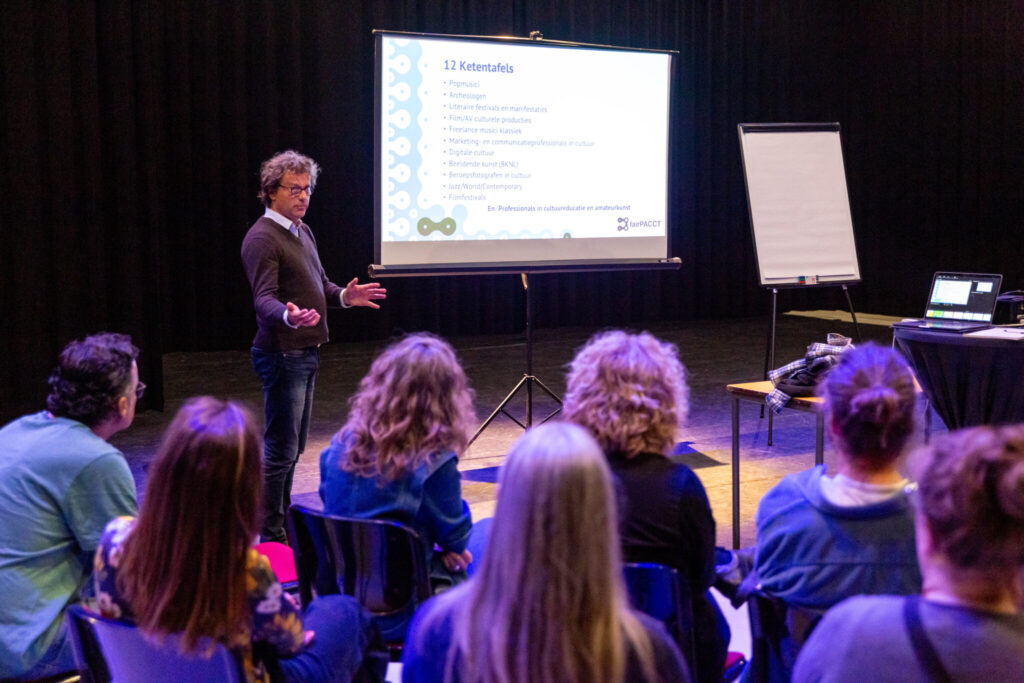
The cultural and creative sector is large and encompasses numerous subsectors. From literature to pop music, and from archaeology to digital culture. Each subsector faces its own challenges regarding fair pay.
To gain a clear understanding of these challenges, we have established chain tables for various subsectors. Professionals from the specific field participate in these chain tables: workers, employers, and clients, as well as representatives from knowledge institutes, intermediaries, and vocational training programs. Independent researchers are involved where necessary.
Together, they examine which steps are needed to move closer to fair pay.
They share their insights and ideas sector-wide so that different fields can learn from one another. Before the tools are put into use, we ask the subsector for feedback. This input is incorporated into the tools and guidelines we publish.